I am noticing a shift
In recent weeks, while working with AI-based development tools, I have noticed a change that I initially found hard to pin down.
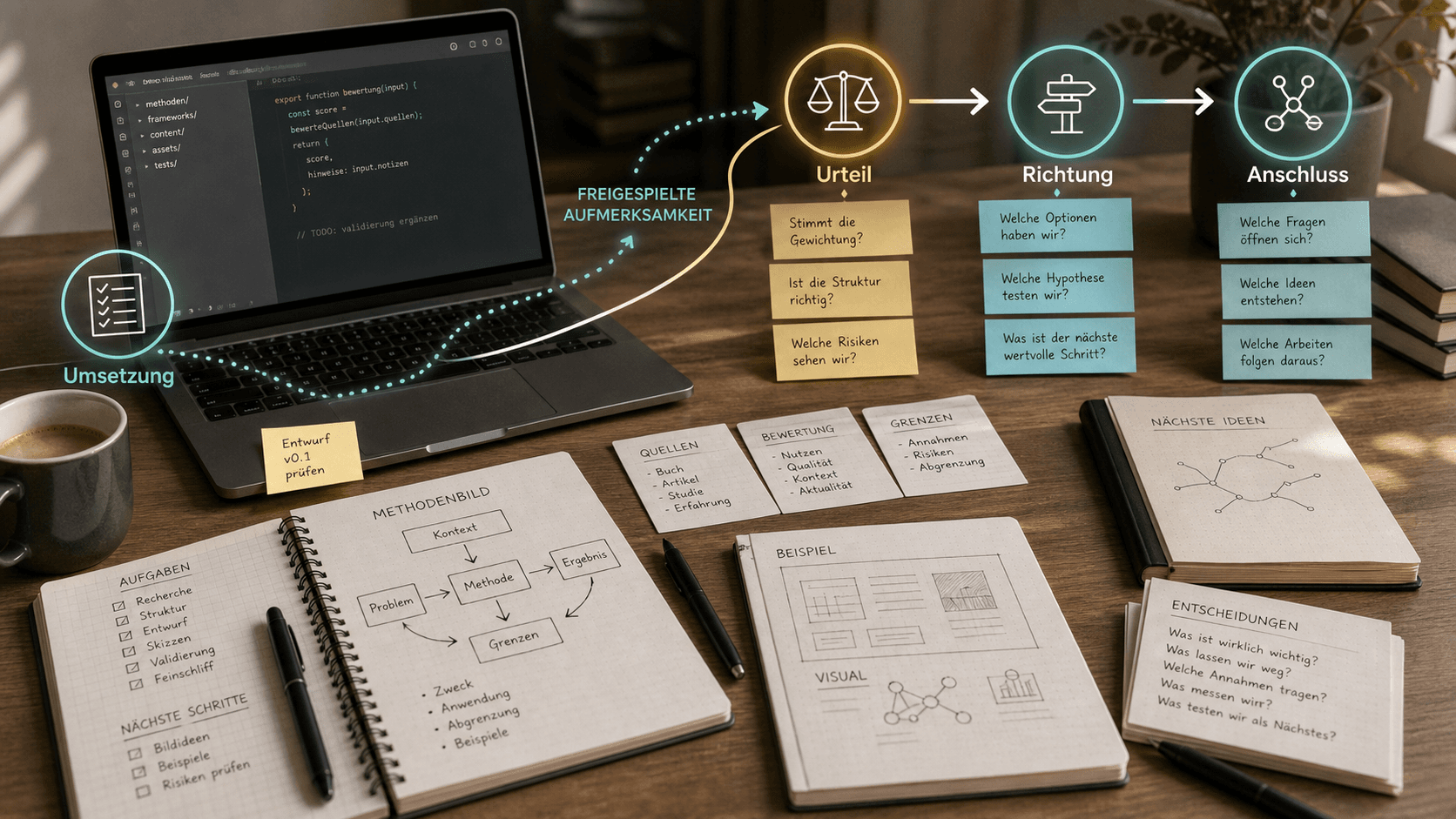
Individual tasks get done faster. Of course it helps when an agent writes boilerplate, creates files, runs tests, looks for bugs or builds a project structure. That is practical and saves time. For me, the more interesting effect lies elsewhere: while implementation is already under way, more attention remains available for considering the next meaningful step.
I look at the technical task and see the product decision behind it sooner. I notice more quickly whether a structure will hold up over time. I think about the next idea alongside it, because the current idea occupies less mental bandwidth.
AI saves time and changes where attention is tied up.
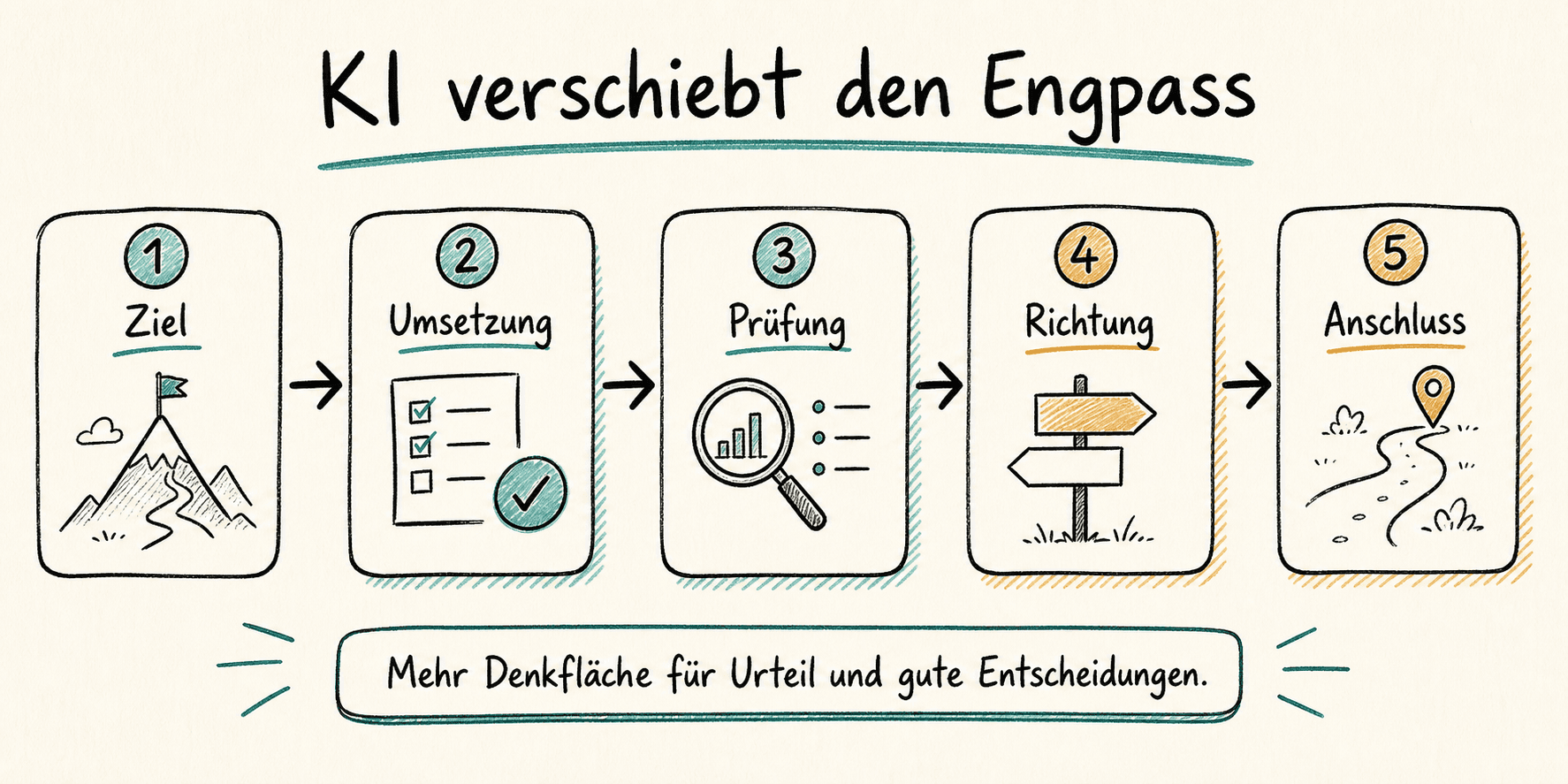
That sounds abstract at first. In practice, it feels very concrete. Some of the work naturally stays with me: defining the goal, maintaining direction, checking intermediate results, assessing quality and making the next decisions. Some of the translation work becomes easier.
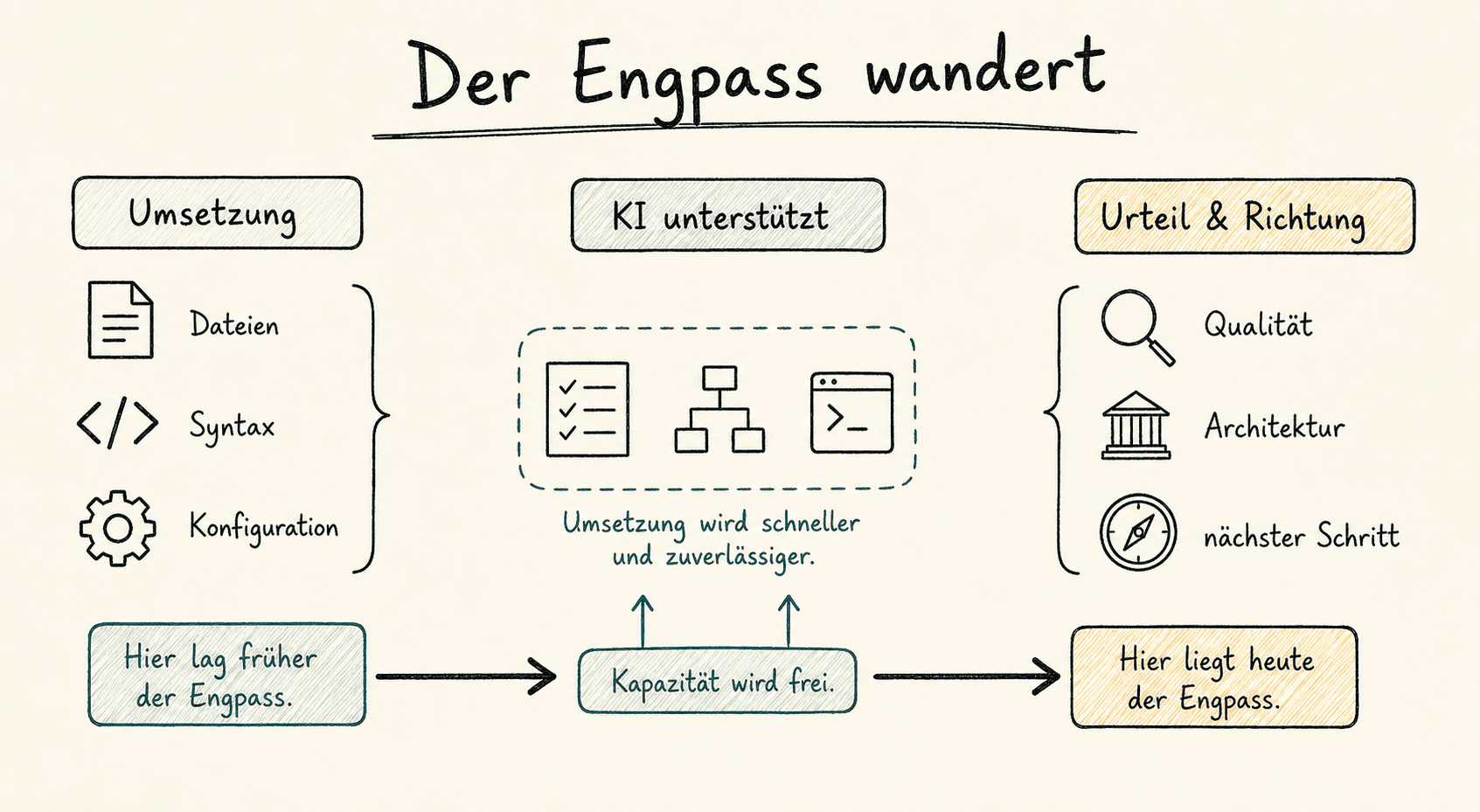
By translation work, I mean the many small steps between intention and a first result: syntax, file paths, configuration, framework details, searching documentation, small corrections, formatting and repetition. All legitimate work. All important, too. This work takes up a lot of thinking space.
When that thinking space becomes available, something interesting happens.
The bottleneck moves
In the past, my bottleneck in development often sat quite close to implementation. I had to keep enough technical details in my head at once to reach even a first usable state:
- Which file?
- Which API?
- Which type?
- Which component?
- Which configuration?
- Which side effect?
With an AI agent, that point shifts. I can describe a goal, set a few rules, provide the existing context and have an initial approach built. After that, the real work often begins sooner:
- Is this the right structure?
- Does it fit the project?
- Is the abstraction useful?
- Will it be maintainable later?
- Does it match the intention?
The bottleneck moves.
“How do I get this built?” becomes “What should I actually build?” sooner.
For me, that is the more important productivity effect. Measuring AI only by the minutes it saves on a task reveals part of its benefit. The other part lies in the shift in attention. More mental energy goes into selection, assessment, architecture and product logic.
This shift does not always feel comfortable. As implementation becomes easier, your own decisions become more visible. You can produce a lot more quickly. That makes it more important to stop, sort and decide at the right time.
Abstraction has done this before
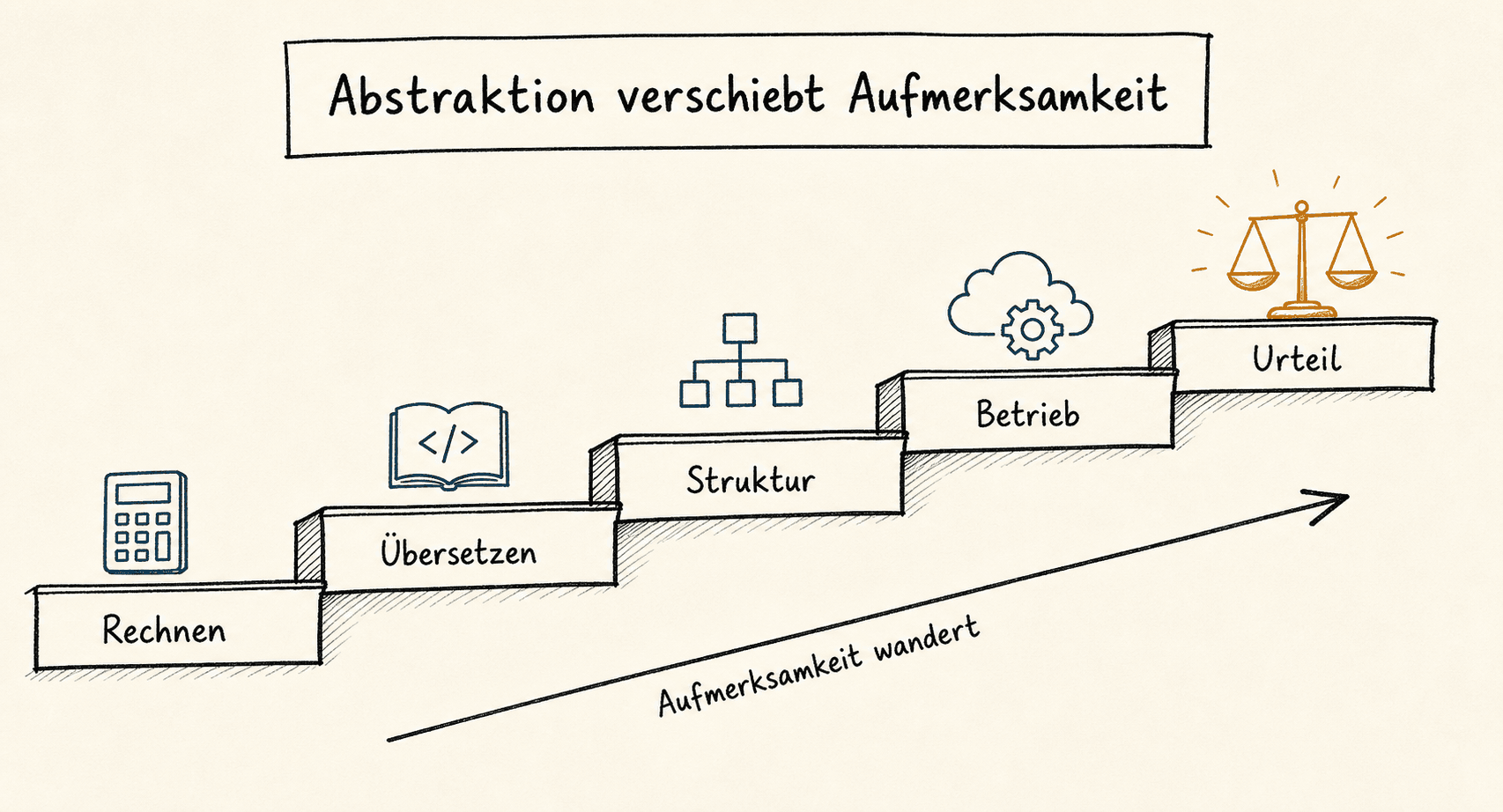
We already know this pattern from the history of technology. A calculator takes mental arithmetic off your hands and makes more complex calculations accessible. A compiler reduces the work of thinking close to machine level. Frameworks handle recurring infrastructure. Cloud services shift attention away from individual servers toward availability, scaling and operational concepts. Each of these abstractions has accelerated work and changed where people need to think.
With AI, this shift is broader. It reaches into language, structure, research, programming, writing, planning and review. This produces a different effect from many earlier tools: the boundary between executing, thinking along and suggesting becomes softer.
An AI agent waits for the next command while also interpreting intentions, drawing on context, making suggestions, building intermediate steps and drafting decisions. That can be enormously helpful. It can also move very plausibly in a direction I did not really want.
The more a tool thinks along with us, the more important our own judgment becomes.
That is precisely where I see the new tension.
An example from my current work
One example is a methods and knowledge project I am working on. At first glance, it sounds like catalogue work: collecting methods, writing descriptions, assigning categories, documenting sources and preparing visuals. In practice, it involves far more decisions than are visible from the outside.
Describing a method is quick. The harder question is whether the description really holds up.
- What is the method useful for?
- In which context does it fit?
- What assumptions does it contain?
- Which sources are reliable?
- Where are its limits?
- What alternatives are there?
- Which method might naturally come before or after it?
In a project like this, AI helps me reach an initial working state faster. It can structure rough drafts, suggest comparison questions, sort variants, formulate image ideas or turn a loose note into a usable first framework. Something emerges more quickly that can be checked, moved, shortened, discarded or developed further.
The real work begins right there. As soon as a first draft is visible, I have to decide:
- whether the emphasis is right.
- whether a method appears too important even though it is only a peripheral aspect.
- whether a visual actually shows the way of thinking or merely looks nice.
- whether a category provides orientation or narrows the subject too early.
- whether a recommendation is justified or merely sounds plausible.
Implementation becomes visible faster. As a result, conceptual decisions become visible sooner.
Freed capacity generates follow-on ideas
The most surprising effect for me right now is that the next idea starts to emerge while I am still working. I work on a concrete artifact and notice, in parallel, the further questions it raises. A collection of methods raises the question of selection support. A description raises the question of context. A sketch raises the question of which thought process an image should actually show. A small LinkedIn draft becomes a possible Medium article about AI, attention and new bottlenecks.
At times, it almost feels like cognitive parallelization. One part of me reviews the current result. Another part is already thinking about structure, connections, reuse or the next products.
Of course, this becomes a restless state when too many follow-on ideas appear at once. Selection is needed again. That is exactly why the shift in the bottleneck matters so much: AI does not automatically generate better direction. It generates more movement. You have to turn that movement into direction.
As implementation becomes easier, selection becomes more valuable.
That is a point I miss in many discussions of AI productivity. They often focus on speed, output or automation. A different question is becoming more important in my work: which mental work becomes available, and what do I use it for?
The new bottleneck is judgment
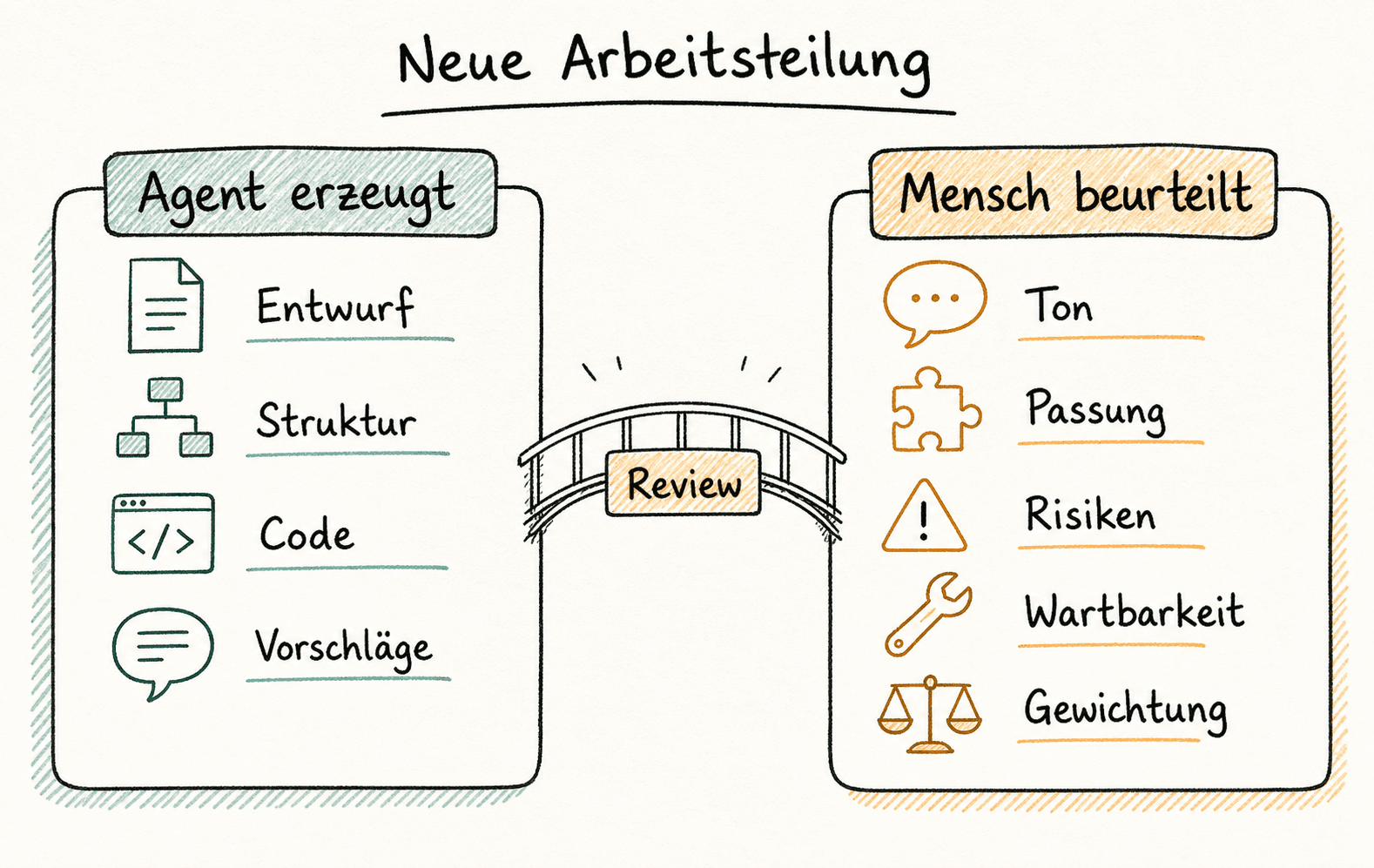
The more AI takes off my hands, the more clearly I see how important my own professional assessment remains. An agent can write a draft. I have to notice whether the tone is right. It can build a structure. I have to judge whether it fits the project. It can suggest a technical solution. I have to assess risks, maintainability and product logic. It can formulate a plausible explanation. I have to recognize whether the emphasis is right.
That is the core of the new division of work. AI makes many things accessible more quickly. This brings the question of quality forward. It accompanies the work continuously. Every acceleration creates a greater need for decisions.
For me, domain knowledge therefore becomes more important. Someone who does not understand the work can produce results faster while being less able to judge them. Someone who understands the work can use AI to reach the interesting levels sooner: structure, selection, assessment and direction.
Productivity as shifted attention
Perhaps we should see AI productivity less as pure time savings. Time savings are real. They are welcome. They make many tasks easier. But they explain only part of why the work feels different.
For me, the deeper effect lies in shifted attention. Less energy goes into the craft of translating a goal into a first result. More energy can go into the question of which goal actually holds up. Which structure will still work later. Which decision really needs to be made now. Which idea merely sounds appealing and which has substance.
That is a substantial change. It makes work faster, but also denser. More possibilities become visible sooner. More decisions are on the table simultaneously. More responsibility rests with the person providing direction.
AI shifts what we can think about sooner.
That is exactly why I find this moment so exciting. A new level of work becomes accessible earlier. Perhaps that is the real productivity effect: when implementation ties up less attention, there is more room for judgment, direction and good follow-on decisions. And that is where, for me, the real work is now beginning.